

Views: 0 Author: Site Editor Publish Time: 2026-09-18 Origin: Site


The escalating complexity of modern electrical architectures is pushing traditional manual wire harness assembly past its operational limits. Driven by electrification, smart technologies, and structural integration, wire routing now requires unprecedented precision. Manufacturers face compounding challenges on the factory floor. Rising labor costs eat into margins. Inconsistent quality control leads to high defect rates in complex routing. Furthermore, manual line balancing creates severe inefficiencies that slow down overall throughput.
Transitioning to automated production is no longer merely a tactic for increasing speed. It is a strategic necessity. Modern assembly environments demand integrated processes and strict compliance traceability. Protecting profit margins in high-stakes manufacturing requires a fundamental shift in how we handle wire processing. By implementing Automated Wire Harness Production Lines, facilities can eliminate manual bottlenecks, ensure zero-defect manufacturing, and dynamically adapt to shifting production schedules.
Deploying automation shifts the production bottleneck from manual routing and crimping to digital line balancing and predictive maintenance.
The successful integration of wire harness automation equipment requires rigorous assessment of its compatibility with existing ERP/MES systems, AI-driven testing, and digital twin simulation capabilities.
ROI is contingent on balancing the throughput of a high-speed production line against the initial Capital Expenditure (CapEx), tooling changeover times, and integration downtime.
Mitigating implementation risks demands a phased approach, typically beginning with the partial automation of high-defect, repetitive processes (e.g., cutting, stripping, and terminating) before moving to fully automated routing or structural integration.
Traditional manual assembly boards carry inherent limitations that restrict scalability. Walk onto any legacy production floor, and you will see 40-foot plywood boards covered in pegs, paper schematics, and tangled bundles of 22 AWG wire. Human error remains a constant threat in these environments. Operators face fatigue-driven defects during long shifts, often misrouting circuits or failing to fully seat terminals into connector housings. Inefficient cable organization on physical pin boards leads to wasted motion and excessive material handling. These manual bottlenecks cause unpredictable variances in task durations. When one operator struggles with a complex splice, the entire assembly line backs up, creating massive work-in-progress (WIP) inventory.
To justify the upgrade to automated systems, engineering teams must define baseline success criteria. Focus on these primary operational metrics:
Cycle Time Reduction: Measure the exact seconds saved per lead by moving from manual stripping and crimping to automated processing.
First-Pass Yield (FPY) Improvement: Track the reduction in rework stations required at the end of the line.
Floor Space Optimization: Calculate the square footage reclaimed by replacing sprawling manual boards with compact, vertically integrated machinery.
Scrap Minimization: Quantify the reduction in wasted copper and terminal reels caused by manual setup errors.
Digitalizing and automating the line balancing process resolves these historical inefficiencies. Automation standardizes task durations across the board. A servo-driven cut-and-strip machine processes a 500mm wire in the exact same millisecond window every single time. It dynamically adapts to demand shifts without requiring physical board reconfigurations. By eliminating unpredictable manual variances, plant managers can accurately forecast daily output and align wire processing with downstream assembly requirements.
You cannot automate blindly. Break down the standard wire harness assembly process to identify which stages yield the highest return on investment. The typical sequence includes cutting, stripping, terminating, splicing, routing, and testing. High-repetition tasks like cutting, stripping, and terminating offer the fastest payback. Automating these early stages guarantees consistent wire lengths and perfect crimp connections. Manual wire stripping often results in nicked copper strands or uneven insulation pullback, which immediately compromises the electrical integrity of the circuit.
Evaluate the strategic benefits of partial automation. You can optimize assembly flow significantly without incurring the prohibitive costs of fully autonomous robotic routing. For many facilities, a hybrid approach works best. Use machines for precise wire preparation and termination. Then, utilize guided manual labor for final complex routing into the main trunk. This balances capital expenditure with immediate quality improvements, allowing operators to focus on tasks that require human dexterity while machines handle the high-speed repetitive work.
Standalone machines create data silos. Connecting wire harness production equipment to central Manufacturing Execution Systems (MES) is an absolute necessity. This integration allows production data to flow seamlessly from the engineering department directly to the factory floor. It eliminates manual data entry errors and ensures machines always run the latest revision of a wiring schematic. If an engineer updates a wire length in the CAD software, that change pushes directly to the cutting machine without requiring an operator to manually type in new parameters.
End-to-end traceability is a strict requirement for modern compliance standards. Automotive suppliers must adhere to ISO/TS 16949, while aerospace manufacturers follow AS9100. Integrated automation logs every crimp force curve, wire length, and test result. If a field failure occurs, you can trace the exact harness back to the specific machine, operator, and material batch. This level of granular data protects manufacturers from massive, sweeping recalls by isolating defects to a specific production hour.
Integrated systems also allow for real-time adjustments to production schedules. If a specific wire gauge runs low, the MES can automatically reroute production to a different harness model that utilizes available inventory. This dynamic scheduling maximizes machine uptime and prevents operators from standing idle while waiting for material replenishment.
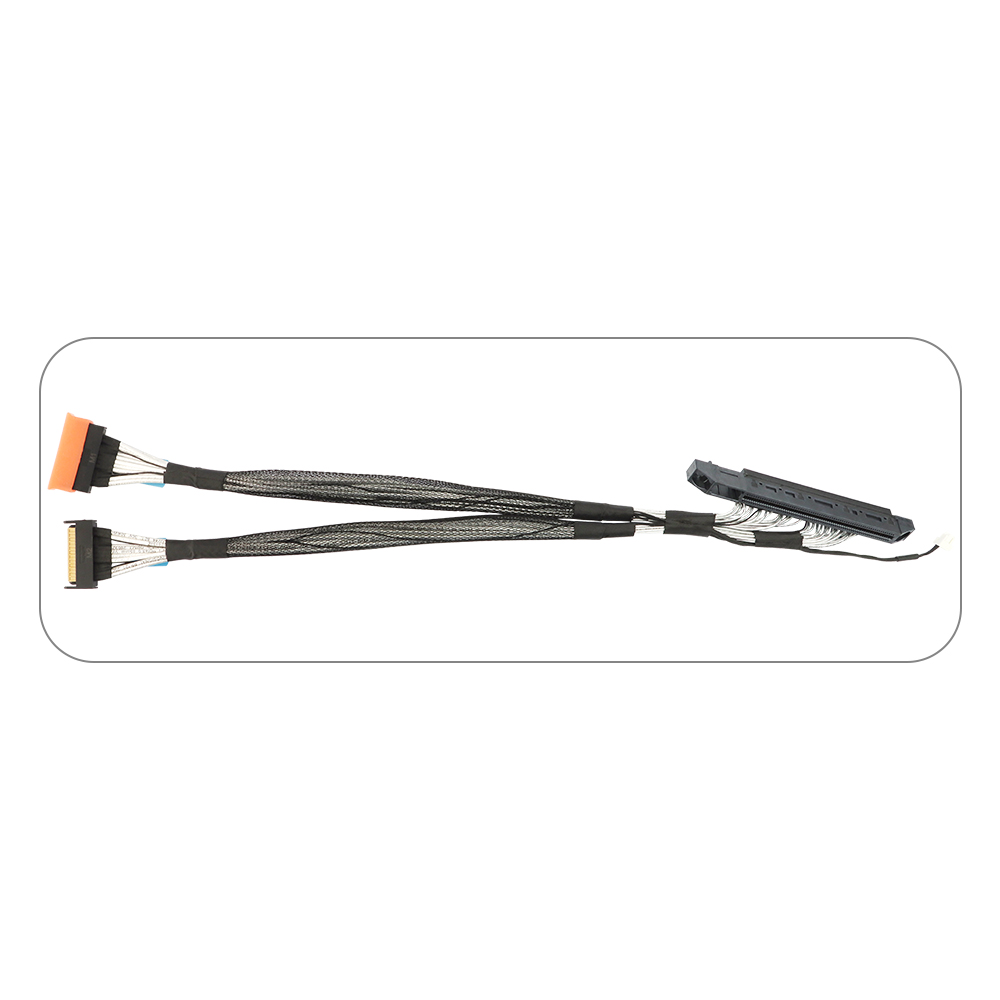
Understanding the operational trade-offs between semi-automated and fully automated systems is critical for facility planning. Standalone wire processing machines handle dedicated cut, strip, and terminate functions. These represent semi-automated setups where an operator manually feeds the prepared wire into a benchtop crimping press. Conversely, comprehensive automated lines handle everything from wire feeding off the spool to final connector insertion without human intervention.
Operational Feature | Semi-Automated Systems | Fully Automated Systems |
|---|---|---|
Production Environment | High-Mix / Low-Volume (HMLV) | Low-Mix / High-Volume (LMHV) |
Tooling Flexibility | High. Quick applicator die changeovers. | Low. Requires extensive mechanical reprogramming. |
Throughput Capacity | Moderate. Relies on manual routing speed. | Maximum. Continuous machine operation. |
Facility Footprint | Small to Medium. Benchtop compatible. | Large. Requires extensive floor space and guarding. |
Maintenance Complexity | Basic pneumatic and mechanical upkeep. | Advanced servo, robotics, and vision system maintenance. |
Semi-automated systems offer crucial flexibility for high-mix/low-volume (HMLV) environments. You can swap applicator dies quickly to accommodate different terminals, moving from a Molex connector to a TE Connectivity terminal in under five minutes. Fully automated systems maximize throughput for low-mix/high-volume (LMHV) runs. They excel when producing thousands of identical harnesses daily, such as standard door panel wiring for a specific vehicle platform.
Digital displays and augmented reality (AR) work instructions play a massive role in semi-automated setups. They bridge the gap between manual assembly and full automation. AR overlays project directly onto the physical harness board, guiding operators through complex routing sequences with color-coded light paths. This visual guidance reduces cognitive load, minimizes routing errors, and speeds up the onboarding process for new assembly workers who no longer need to memorize complex paper schematics.
Mechanics drive efficiency in a high-speed production line. Continuous wire feed systems utilize motorized dereelers and accumulator pulleys to maintain optimal tension. This prevents tangles and feed jams when pulling wire off a 500-pound spool at high velocities. Automated block loading mechanisms insert terminated wires into plastic connector housings with pinpoint accuracy, utilizing force sensors to ensure the terminal clicks securely into the plastic locking lance. Robotic routing arms handle the physical layout, moving faster and more consistently than human hands.
Integrating AI-driven Automated Optical Inspection (AOI) directly into the line transforms quality control. AOI cameras inspect every crimp and connector in milliseconds. The system analyzes the bellmouth, conductor brush, and insulation position. The AI learns new defect patterns over time, such as subtle insulation damage or slight terminal bending. It corrects routing errors in real-time, rejecting bad parts into a scrap bin before they move downstream and get taped into the final bundle.
Advanced structural integration capabilities are reshaping product design. Modern equipment facilitates integrating wiring directly into product structures. This eliminates the need for heavy protective conduits and additional mounting hardware. By embedding the harness into structural panels or overmolding the entire assembly, manufacturers reduce overall vehicle or aircraft weight, directly improving fuel efficiency and mechanical performance.
The automotive sector presents distinct technical demands. Processing heavy-duty, high-voltage cables for Electric Vehicles (EVs) requires vastly different machinery than standard low-voltage data harnesses. EV cables feature thick insulation, heavy braided shielding, and large cross-sectional areas often exceeding 50mm². Standard V-blades and benchtop crimping presses simply cannot handle these robust materials without crushing the dielectric or stalling the motor.
Deploying specialized automotive wire harness processing equipment ensures safety and compliance. These systems utilize multi-step rotary stripping blades to carefully score and remove the outer jacket and foil shielding without nicking the inner copper conductors. They also feature heavy-duty hydraulic or servo presses capable of delivering 15 to 20 tons of force required to crimp large tubular battery terminals.
Integration of specialized technologies is mandatory for automotive safety compliance. Ultrasonic welding stations splice high-voltage cables together, creating a solid-state molecular bond that resists vibration and thermal stress far better than traditional mechanical crimps. Real-time crimp force monitoring (CFM) analyzes the pressure curve of every single termination. If a crimp falls outside the acceptable tolerance window—indicating a missing copper strand or trapped insulation—the machine immediately flags the part for destruction, ensuring a faulty connection never makes it into a vehicle.
Evaluating machine cycle times against actual production line takt times is a critical engineering task. You must ensure the new wire harness automation equipment does not simply shift the bottleneck downstream. If your automated cutter produces 5,000 wires an hour, but your manual routing team can only process 1,000, you will quickly accumulate excess WIP inventory that clutters the factory floor and ties up working capital in unfinished goods.
Assess the modularity of the system architecture. A highly modular system allows for seamless scaling. You can start with a basic cut-strip-terminate machine. As demand grows, you can add individual robotic block loading stations, automated twisting modules for twisted-pair data cables, or inline testing modules. This plug-and-play approach prevents you from overhauling the entire line when production requirements change, allowing you to scale capital investments alongside actual revenue growth.
Hardware is only as effective as the software controlling it. Assess software compatibility requirements early in the procurement process. The equipment must support digital line balancing and dynamic workflow routing. Look for open communication protocols like OPC UA or MQTT, which allow the machines to talk directly to your existing factory network and push live telemetry data to your SCADA systems.
Utilizing digital twins provides massive value for assembly flow optimization. A digital twin is a virtual replica of your physical production line. You can simulate different harness designs, detect robotic arm collisions, and test machine configurations virtually. This allows manufacturing engineers to optimize the setup, balance the line, and write the PLC logic before physical deployment, drastically reducing installation downtime and commissioning risks.
Quality assurance must be built into the automation, not added as an afterthought at the end of the line. Review the in-line testing mechanisms integrated into the equipment. Essential tests include electrical continuity testing to ensure proper pin-to-pin connections and high-pot (high potential) testing to verify insulation integrity and detect micro-shorts. Automated push-out force measurement ensures terminals are securely locked into their plastic housings and will not back out under vibration.
Analyze the capability of the equipment to perform automated data logging. Every test result, crimp force curve, and optical inspection image should be saved to a central database. This creates a complete digital thread for every harness produced. When auditors arrive, you can instantly pull the complete manufacturing history of any serial number, satisfying strict compliance requirements effortlessly and proving that your processes remain in control.
Investing in automation requires a clear framework for breaking down initial equipment and installation costs versus long-term operational savings. The initial CapEx can be substantial, especially for fully automated robotic lines equipped with vision systems and servo presses. However, the operational savings accumulate rapidly. You will see immediate reductions in direct labor costs, significant scrap minimization, and fewer warranty claims due to field failures.
You must also factor in the ongoing operational expenses associated with advanced machinery. Complex robotics require specialized preventive maintenance routines. Tooling replacements, such as rotary cutting blades, anvils, and crimp punches, add to the monthly budget and wear out based on cycle counts. Software licensing fees for AI vision systems and MES integrations must be calculated into the long-term financial model. Balancing these expenses against labor savings and quality improvements dictates the true ROI timeline.
Manufacturing leaders face a core trade-off between highly specialized, rigid automation and flexible, programmable robotic cells. Rigid automation provides maximum speed. It is ideal for producing millions of identical harnesses. However, it offers limited scope. If the harness design changes—even slightly altering a wire length or connector type—modifying the rigid line takes weeks of mechanical engineering effort and custom tooling fabrication.
Flexible robotic cells operate at a slower speed but adapt easily to design changes. You can reprogram a robotic arm for a new routing path in hours using offline programming software. Evaluate the critical metric of changeover times. Tooling swap efficiency is paramount for facilities managing a high-mix manufacturing portfolio. Implementing Single-Minute Exchange of Die (SMED) principles on your wire processing equipment keeps machine uptime high even during frequent product changeovers.
Installing heavy industrial equipment carries significant facility risks. Inadequate floor space can cramp operator movement, block forklift aisles, and violate safety codes. Insufficient power supply or lacking pneumatic infrastructure will prevent the machines from operating at peak capacity. Heavy-duty wire processing requires clean, dry compressed air—typically around 80 to 100 PSI—and stable three-phase 480V power. Moisture in the air lines will quickly destroy the pneumatic cylinders inside a cut-and-strip machine.
Mandate comprehensive pre-installation site audits to mitigate these risks. Conduct 3D spatial planning using the equipment's CAD models to ensure proper clearances for maintenance access, safety guarding, and material handling. Develop phased rollout schedules. Install and commission one machine at a time to minimize facility disruption and maintain baseline production levels during the upgrade.
Introducing robotics often triggers operator resistance. Workers fear job displacement. Workflow disruption during the installation phase causes frustration. Furthermore, many facilities lack the internal maintenance expertise required to service advanced robotics, troubleshoot servo drives, and calibrate AI vision systems.
Address these human factors proactively. Contractually require vendor-supplied training programs as part of the equipment purchase. Strategically transition your manual assemblers into higher-value roles. Train them to become machine supervisors, quality control specialists, or preventive maintenance technicians. Upskilling your workforce ensures you have the in-house talent to keep the automated lines running smoothly and demonstrates a commitment to your employees' long-term careers.
Data integration rarely works perfectly out of the box. API mismatches and data formatting conflicts frequently occur between legacy ERPs and modern automation control software. If the machine cannot read the XML work orders from your ERP, it cannot run automatically. This forces operators to manually input wire lengths and batch quantities via the HMI, completely defeating the purpose of digital integration and reintroducing human error.
Establish strict data architecture requirements before signing any purchase orders. Demand proof-of-concept (PoC) software integrations during the vendor selection phase. Force the vendor to demonstrate that their machine can pull a live work order from your specific MES environment and push a test result back to your database. Resolving software hurdles before the machine ships saves weeks of frustrating downtime on the factory floor.
Conduct a granular time-study of your current manual bottlenecks to identify exact cycle time deficits and pinpoint where automation will yield the highest immediate return.
Define your exact high-mix versus high-volume operational needs to determine the required level of machine flexibility and tooling changeover speed.
Audit your facility's pneumatic and electrical infrastructure to ensure you have the required clean, dry compressed air and stable three-phase power for heavy-duty equipment.
Request digital twin simulations or PoC demonstrations from shortlisted equipment manufacturers using your actual harness CAD designs and wire specifications.
Develop a comprehensive workforce transition plan to upskill manual operators into machine supervisory, quality assurance, and preventive maintenance roles.
A: The typical ROI timeline ranges from 12 to 24 months. This depends heavily on your production volume and current labor costs. High-volume facilities replacing multiple manual shifts with a single automated line achieve faster ROI. Facilities with high-mix, low-volume production may take closer to 24 months due to frequent tooling changeovers and programming time.
A: Automotive equipment is engineered for heavier, more complex materials. It features robust rotary blades for stripping thick, shielded high-voltage EV cables without damaging inner conductors. It also includes high-tonnage servo presses for large battery terminals and integrates specialized safety compliance tools like ultrasonic welding and real-time crimp force monitoring.
A: Generally, rigid high-speed lines struggle with HMLV manufacturing due to long mechanical changeover times. However, modern modular lines equipped with quick-change applicator dies and flexible robotic routing cells can handle HMLV efficiently. Success in HMLV requires prioritizing machine flexibility and rapid software reprogramming over raw maximum throughput.
A: Digital displays and augmented reality guide operators step-by-step through complex manual routing, reducing cognitive load and preventing sequence errors. AI testing, such as Automated Optical Inspection (AOI), instantly verifies crimp quality and connector seating. This combination ensures high quality while maintaining the flexibility of human-led assembly.
A: Facilities must provide stable three-phase industrial power and clean, dry compressed air to operate pneumatic actuators reliably. Adequate floor space is required not just for the machine footprint, but for safe operator access, material feeding zones, and maintenance clearances. Reinforced flooring may be needed for heavy servo presses.
A: Automation standardizes task durations, eliminating the unpredictable time variances caused by human fatigue or manual routing errors. This predictability allows engineers to perfectly align machine cycle times with the overall factory takt time. It prevents WIP inventory buildup and ensures a smooth, continuous flow of materials to downstream assembly stations.
A: Digital twins create a virtual simulation of the production line. Engineers use them to test different wire routing paths, detect potential robotic arm collisions, and optimize machine layouts before physical installation. This virtual testing drastically reduces commissioning time, prevents costly hardware damage, and ensures the line runs efficiently from day one.


