

Views: 0 Author: Site Editor Publish Time: 2026-09-24 Origin: Site


The transition to 800V+ architectures in electric vehicles (EVs), hybrid electric vehicles (HEVs), and heavy-duty electrified transport fundamentally alters the risk profile of electromechanical interfaces. Validating high-voltage (HV) connectors is now a strict safety and liability bottleneck. Manufacturers face the dual challenge of meeting stringent automotive safety standards—preventing arc flash, thermal runaway, and insulation breakdown—while maintaining high-throughput production cycles. Legacy testing setups frequently cause false rejects, require excessive maintenance, or fail to capture harsh-environment degradation. Selecting the appropriate Connector Testing Machine requires moving beyond basic continuity checks. This guide provides a framework for evaluating testing equipment based on electrical rigor, mechanical validation, and integration capabilities to ensure robust production outcomes.
Compliance is Non-Negotiable: Viable testing equipment must natively support validation against industry-standard frameworks, including USCAR-2, USCAR-37, and LV215.
Integration Drives Throughput: The most efficient facilities utilize unified connector assembly and testing equipment to minimize handling errors and reduce cycle times.
Scalability Requires Modular Tooling: As EV connector designs evolve toward "smart" interfaces with embedded sensors, testing machines must offer interchangeable fixtures and programmable test parameters to avoid premature obsolescence.
Data Traceability Mitigates Risk: Deep integration with Manufacturing Execution Systems (MES) is required to log individual connector test data, ensuring auditability and rapid root-cause analysis in the event of field failures.
Defining success criteria for testing protocols in an EV context requires absolute precision. A successful testing framework operates on a strict zero-defect tolerance policy. Insulation resistance must be verified to prevent current leakage under high electrical loads. Contact resistance requires precise micro-ohm measurement to prevent localized heating. Furthermore, the high-voltage interlock loop (HVIL) functionality must be validated to ensure the system safely de-energizes when a connector is uncoupled. These parameters form the baseline of modern vehicle safety.
To establish a reliable testing protocol, engineering teams must implement specific operational benchmarks. These benchmarks ensure that every component leaving the line meets exact specifications.
Establish a baseline for dielectric withstand voltage specific to the connector's maximum rated load.
Define acceptable micro-ohm resistance thresholds for all terminal interfaces.
Implement automated HVIL continuity checks that trigger within milliseconds of pin disengagement.
Require mandatory logging of all test curves to a centralized database for traceability.
Vehicles operate in unforgiving environments. Connectors endure rapid temperature fluctuations, continuous vibration, and exposure to road salts, water, and debris. Testing protocols must simulate these real-world automotive conditions. Equipment must validate components against IP67 and IP6K9K ingress protection standards. This level of rigorous automotive connector testing is mandatory for passenger EVs. It becomes even more critical for heavy-duty trucks, off-road machinery, and specialized transport where mechanical stress is exponentially higher.
Inaccurate test results carry severe operational and safety consequences. False positives allow defective connectors to enter the supply chain. This directly leads to catastrophic field failures, thermal runaway events, and massive recall liabilities. Conversely, false negatives reject perfectly good components. This degrades production yield and inflates manufacturing waste. High-fidelity signal processing within the testing apparatus is essential. Advanced equipment filters out ambient electrical noise on the factory floor, ensuring measurements reflect the true condition of the connector interface.
Electrical validation forms the core of high-voltage component verification. Modern high voltage connector testing equipment utilizes multiple specialized techniques to ensure safety and performance. Standard continuity checks are insufficient for 800V architectures. The equipment must push the connector to its physical limits without causing permanent degradation.
Dielectric Withstand Voltage (Hipot) Testing: This process evaluates clearance and creepage distances within the connector housing. The machine applies peak voltage loads—often exceeding 3kV to 5kV—to ensure no arcing occurs between adjacent pins or between pins and the outer shield.
Insulation Resistance & Partial Discharge: High voltages can cause partial discharge within microscopic voids in polymer housings. Over time, this degrades the insulation and leads to short circuits. Advanced testing identifies these micro-defects before they result in catastrophic failure.
Milliohm/Micro-ohm Contact Resistance: Using precise 4-wire Kelvin measurement techniques, the equipment verifies contact resistance. Minimal resistance is required to prevent power loss and dangerous thermal generation across the terminal interface during high-current fast charging.
EMI/RFI Shielding Effectiveness: High-voltage cables emit electromagnetic noise. This interference can disrupt sensitive vehicle software strategies and autonomous safety components. Testing validates the integrity of 360-degree shielding components to ensure electromagnetic compatibility.
Electrical integrity relies heavily on mechanical stability. Connectors must remain securely mated despite constant vehicle vibration and thermal expansion. If a terminal backs out of its housing by even a millimeter, the resulting arc can destroy the surrounding components.
Mating and Unmating Force Measurement: The equipment measures the precise force required to engage and disengage the connector. This validates ergonomics for assembly line workers and ensures mechanical integrity over the connector's specified lifecycle.
Fastener and Secondary Lock Validation: Connectors utilize Terminal Position Assurance (TPA) and Connector Position Assurance (CPA) mechanisms. The testing machine physically verifies that these secondary locks are properly seated and functional, preventing accidental disconnection.
Vibration and Thermal Shock Integration: High-end testing setups interface directly with environmental chambers. This allows manufacturers to conduct accelerated life testing, monitoring contact resistance continuously while the connector is subjected to extreme temperature cycling and multi-axis vibration.
Next-generation EV connectors are no longer passive components. They incorporate active electronics to monitor system health. Testing machines must now validate embedded temperature sensors, such as NTC thermistors, ensuring they accurately report thermal data to the vehicle's Battery Management System (BMS). Additionally, the equipment must test active HVIL circuits, verifying that the low-voltage safety loop breaks exactly as designed before the high-voltage pins disengage.
Modern production lines favor consolidated manufacturing cells. Unified connector assembly and testing equipment combines multiple discrete steps into a single automated architecture. These machines perform terminal insertion, seat the secondary locks, and execute end-of-line (EOL) electrical testing without manual intervention. This architecture eliminates intermediate handling damage, reduces floor space requirements, and provides immediate feedback if an upstream assembly error occurs.
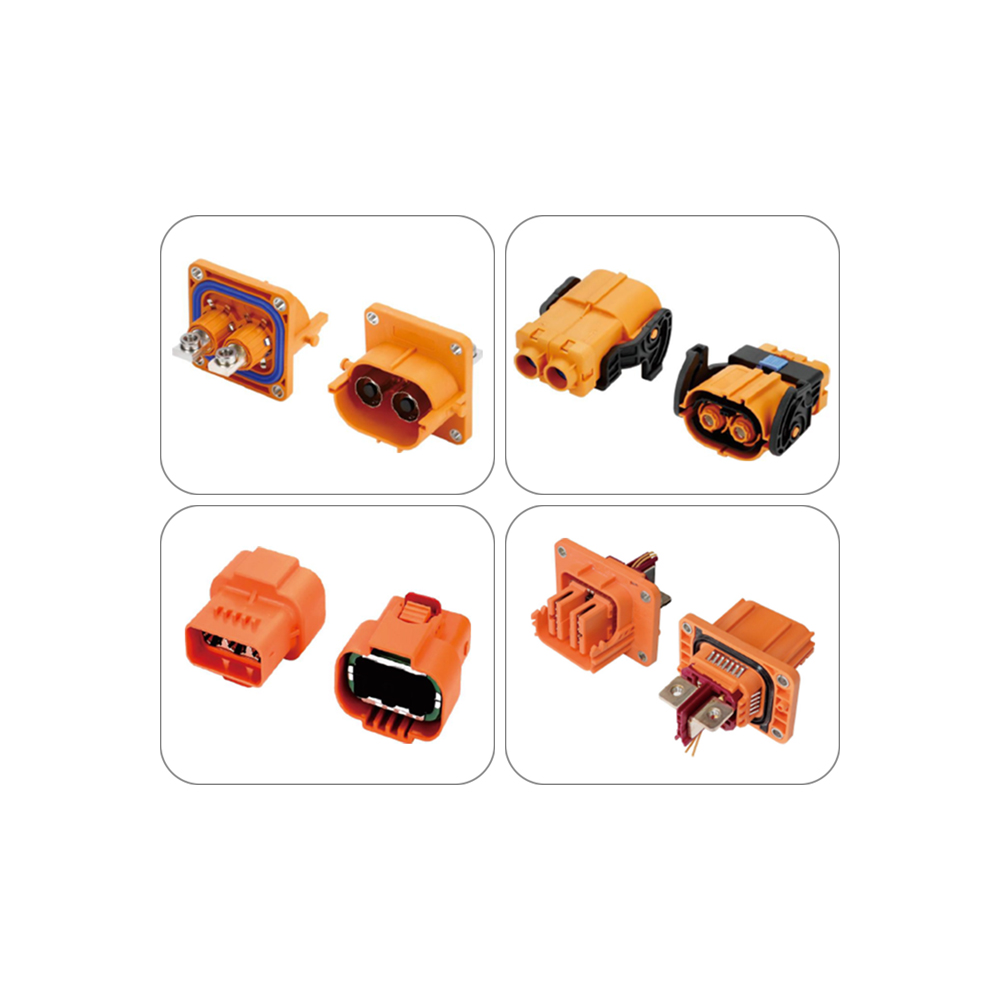
Production environments demand rapid cycle times, but high-voltage testing requires physical time for accurate measurement. Evaluating the settling time of high-voltage test instruments is critical. When testing long cable assemblies, the inherent capacitance of the cable requires time to charge before an accurate insulation resistance reading can be taken. Rushing this process yields unstable data.
Balancing speed and accuracy requires advanced hardware. Facilities leverage low-maintenance electrical test connectors, such as EHE-style interfaces, to enable faster testing cycles. These specialized pneumatic or mechanical interfaces establish secure, low-resistance connections instantly. They deliver accurate results without compromising operator safety or requiring extended manual clamping times.
Production lines rarely run a single product indefinitely. Scalability determines the long-term viability of the equipment. Assess the machine's ability to handle multiple connector variants with minimal changeover time. A robust system accommodates everything from 1-way auxiliary power headers to multi-way traction motor connectors.
Software flexibility is equally important for high voltage connector assembly. Engineers must be able to generate custom test sequences without relying on the equipment manufacturer for expensive software updates. Modular tooling—where physical test fixtures can be swapped out in minutes using quick-release mechanisms—ensures the machine adapts to evolving HEV and full EV architectures.
Automotive manufacturing operates under strict regulatory oversight. Testing equipment must output data that complies with ISO 26262 functional safety requirements. Binary pass/fail data is no longer sufficient for modern quality control.
Evaluate the database architecture of the testing machine. It must store high-resolution test curves, exact voltage leakage values, and insertion force graphs tied to individual serial numbers or QR codes. This deep traceability allows manufacturers to prove compliance during audits and perform precise root-cause analysis if a component fails in the field.
Evaluation Parameter | Standard Benchtop Testing | Automated Testing Cell |
|---|---|---|
Cycle Time | 30 - 60 seconds per part | 5 - 15 seconds per part |
Changeover Speed | Manual fixture swapping (15+ mins) | Quick-release modular tooling (<5 mins) |
Data Traceability | Basic Pass/Fail logging | High-resolution curve storage per serial number |
Operator Safety | Relies on manual PPE and basic shielding | Hardware interlocks, light curtains, automated grounding |
Defect Detection | Catches gross continuity errors | Identifies micro-voids via partial discharge |
Evaluating testing equipment requires a deep look at operational efficiency. Automated, multi-station testing machines drastically reduce scrap rates compared to manual or semi-automated benchtop setups. By catching defects immediately after terminal insertion, automated cells prevent value from being added to already compromised parts. This optimizes labor allocation, allowing operators to focus on machine supervision rather than repetitive manual testing.
Maintenance and calibration routines heavily influence line uptime. Proprietary test fixtures often introduce hidden delays. Facilities must evaluate the frequency and complexity of machine calibration required to maintain ISO 17025 compliance. If a machine requires a factory technician for routine calibration, it creates unacceptable production bottlenecks.
Wear and tear on high-voltage test mating connectors is another major operational factor. Traditional pogo pins degrade quickly under high-cycle conditions, leading to false resistance readings. Specialized pneumatic test interfaces and advanced ergonomic connectors are designed for minimal maintenance and high-cycle durability. These interfaces actuate only when perfectly aligned, eliminating the scraping and plating wear associated with manual insertion.
Deploying advanced testing equipment introduces the risk of data silos. If the machine cannot communicate effectively with the plant's MES, tracking individual serial numbers becomes impossible. This breaks the traceability chain required by automotive OEMs.
Mitigate this risk by mandating standardized communication protocols during the equipment specification phase. Require native support for OPC UA, PROFINET, or SECS/GEM. These protocols ensure seamless data handoffs between the testing machine, the factory database, and upstream assembly stations. Proper integration allows the system to automatically quarantine failed parts and adjust upstream processes based on real-time trend analysis.
High-voltage testing inherently involves lethal electrical loads. Manual loading, unloading, or maintenance procedures expose operators to severe risks. An accidental discharge or improper grounding sequence can result in fatal injuries.
Safety must be engineered into the hardware. Mandate hardware-based safety interlocks on all access panels. Implement Category 4 safety light curtains across the loading zone. The system must feature automated grounding mechanisms that discharge residual capacitance before the operator can access the part. Dual-palm start buttons and software-driven safety strategies ensure the operator's hands are clear of the testing zone before high voltage is applied.
A high-performance testing machine is useless if it sits idle awaiting repairs. Extended downtime due to a lack of local OEM support or proprietary spare parts cripples production schedules.
Evaluate the vendor's service level agreements (SLAs) rigorously before purchase. Prioritize equipment providers with a strong regional footprint and rapid parts availability. Furthermore, require remote diagnostic capabilities. Secure, VPN-based remote access allows the equipment manufacturer's engineers to troubleshoot software faults, adjust test parameters, and resolve calibration issues without waiting for an on-site technician.
A connector testing machine serves as a highly specialized quality gate that dictates the safety, reliability, and longevity of the entire EV and HEV high-voltage architecture. Settling for inadequate testing protocols directly exposes manufacturers to catastrophic field failures. The equipment chosen must align perfectly with the physical demands of the connectors and the data requirements of the production facility.
When shortlisting equipment, match the system architecture to your production volume. For low-volume, high-mix research and development environments, prioritize flexible, modular benchtop systems equipped with deep analytical software. For high-volume production lines, prioritize fully automated connector assembly and testing equipment. These systems must feature robust MES integration, advanced pneumatic test mating interfaces, and rapid cycle times to maintain throughput without sacrificing accuracy.
Execute the following next steps to advance your equipment selection process:
Compile all specific connector drawings, pinout configurations, and required test standards.
Define exact cycle time targets and acceptable false-reject thresholds for your production line.
Request targeted capability studies and physical proof-of-concept demonstrations from shortlisted equipment vendors using your actual connector samples.
Audit the vendor's software interface to ensure your engineering team can independently program new test sequences.
A: Low-voltage testing primarily focuses on basic continuity and pin presence for 12V/48V systems. High-voltage testing requires rigorous Dielectric Withstand Voltage (Hipot) testing up to 5kV+, partial discharge monitoring to detect micro-voids in insulation, and validation of the High Voltage Interlock Loop (HVIL). These parameters ensure safety against lethal voltages and thermal runaway.
A: Equipment must support validation against stringent automotive frameworks. Primary standards include USCAR-2 and USCAR-37 for performance testing, and LV214/LV215 specifically for high-voltage automotive contact systems. Additionally, the equipment should align with relevant IEC and ISO specifications governing EV components and functional safety.
A: Combining assembly and testing into a single automated cell eliminates manual handling damage between stations. It provides immediate closed-loop feedback, allowing systems to correct upstream assembly errors instantly. This ensures 100% end-of-line verification, drastically reducing scrap rates and preventing defective parts from reaching the final vehicle assembly.
A: Cycle times typically range from 5 to 30 seconds per part. The exact duration depends on the complexity of the test sequence, the number of pins, and the required dwell time for high-voltage insulation tests to stabilize. Using advanced pneumatic test connectors significantly reduces the mechanical engagement portion of the cycle.
A: Testing machines utilize specialized, high-durability test interfaces rather than standard production connectors. These include pneumatically actuated pins, EHE-style connectors, or sacrificial mating adapters. These interfaces are engineered to withstand tens of thousands of mating cycles without degrading test accuracy or damaging the production part being tested.
A: Yes, existing assembly lines can be retrofitted. Success depends on utilizing modular testing stations with adaptable physical footprints. Seamless integration requires standardized PLC communications to ensure the new testing module handshakes correctly with legacy conveyors and existing manufacturing execution systems.
A: While core electrical principles remain identical, equipment for heavy-duty applications must accommodate much larger form factors and higher continuous current ratings. Furthermore, these machines execute more rigorous mechanical and environmental validation parameters to simulate the extreme vibration, dust, and moisture exposure inherent in off-road operating conditions.


